What Is Kinesiology?
Kinesiology is a complementary therapy which uses gentle muscle testing to identify imbalance within the physical, emotional and energetic body. It was developed by Dr George Goodheart, an American Chiropractor in the 1960’s. He observed how some muscles could be tight or weak and questioned why. What was needed for the muscle to be corrected and how could the results be sustained. He noticed that 5 systems needed to be considered and supported for optimal health, including the acupuncture, lymphatic and nervous system. He developed the triad of health principles, that structural, nutritional, emotional and energetic factors have a relation to one another. If there is an imbalance in one, it could show itself in another area.
Many different forms of Kinesiology have since developed but the principles remain the same. With Systematic kinesiology each muscle relates to an organ, and as with acupuncture, also the energy pathway’s known as meridians. With each muscle test, we are asking the body what muscle or energy pathway needs support, also what is causing the body stress. The body responds by communicating how it would like to be supported and balanced:
Emotional Support: Including Bach flower remedies and Phytobiophysics flower formulas, which gently help to restore emotional equilibrium. Together with techniques, including the emotion code, to support and if necessary remove self limiting beliefs or habits. Improving self esteem or resolving past issues with affirmations, verbal challenges and/or tapping meridian points to anchor new information.
Nutritional Support: A nutritional supplement, such as a vitamin/mineral to support and aid healing or to replenish. A sensitivity to a food or a formula to detoxify. Endocrine or blood sugar support, or something as simple as needing to drink more water.
Structural Support: Massaging lymphatic points or spinal reflexes where energy has become stagnant, corrections for digestive discomfort, sciatica and areas of pain.
Electrical (Energetic) Support: This could be tracing the meridian pathway of an organs energy system, holding neurovascular points to bring blood flow to an area, balancing chakras and repairing the aura.
What happens in a Kinesiology session?
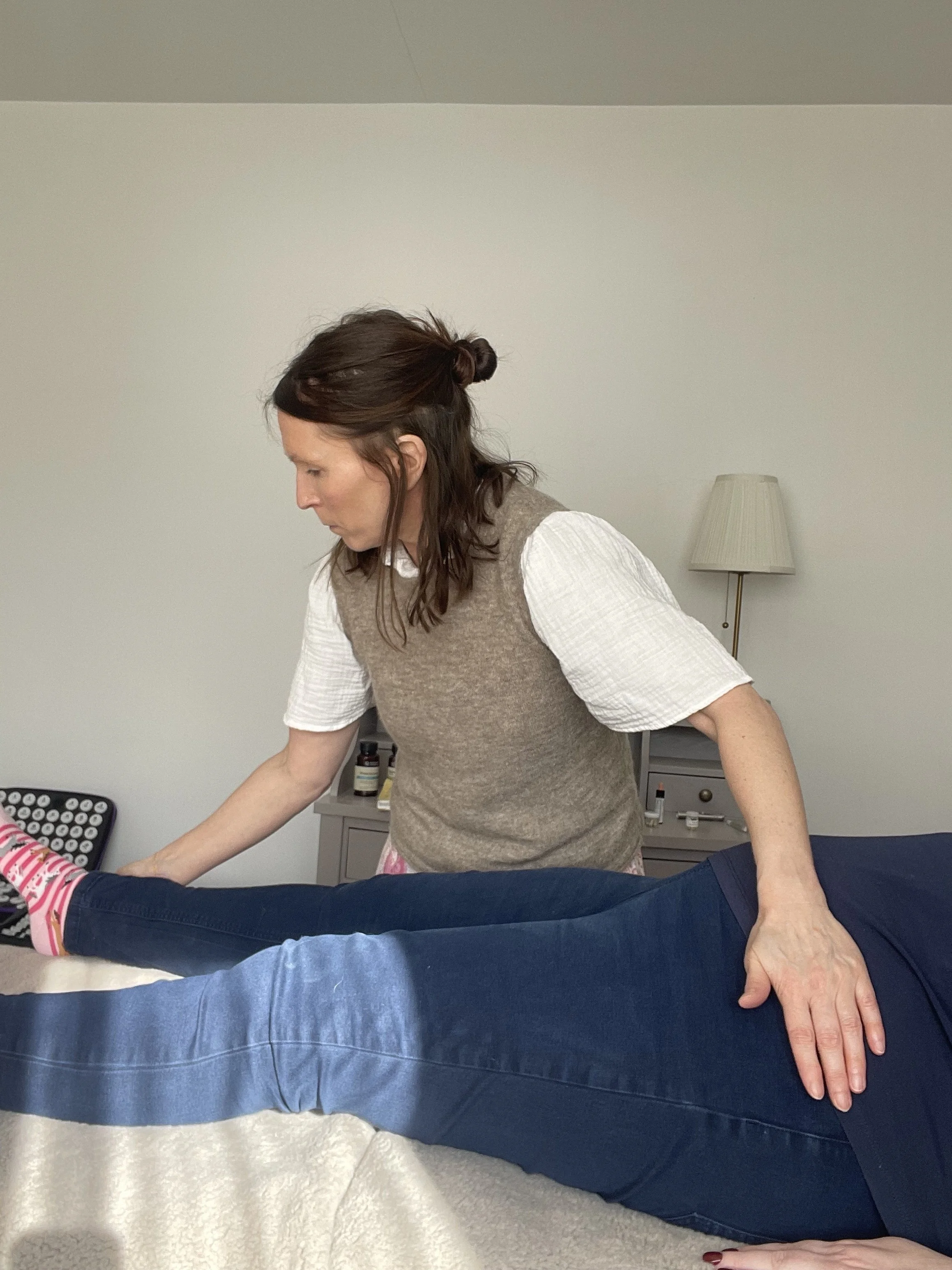
After discussing your health concerns or issue’s, the kinesiology session will be focused on what is a priority for you and what your body is communicating through bio feedback. As a systematic kinesiologist, I will use gentle muscle testing on arm and leg muscles to identify areas that are showing imbalance and need support.
Kinesiology is a relaxing therapy and clients report of feeling lighter, calmer, more focused and having more restful sleep afterwards. It is advisable to wear comfortable clothing for the session, such as leggings.
Examples of issues clients seek support for:
Achieving Goals: Self confidence, weight loss, fears and phobias.
Digestive Issues: Including constipation, diarrhoea, bloating, acid reflux, heartburn, irritable bowel syndrome and general discomfort.
Emotional Stress: Anxiety, grief, low mood, lack of motivation and overwhelmed.
Endocrine System: Including thyroid, adrenal and blood sugar support.
Fatigue: Tired all the time, chronic fatigue syndrome, fibromyalgia, sleep issues and insomnia.
Food Sensitivities: This can be a stand alone session with checking digestive sufficiency. I am also able to offer comprehensive food sensitivity and gut barrier testing with KBMO diagnostics. Please message me for details and prices.
Hair and Skin Issues: Alopecia, acne, eczema and psoriasis.
Hormonal Changes: PMS, fertility, peri-menopause, menopause and the many symptoms associated with it.
Immunity: Feeling run down, frequent infections, hay fever and sinusitis.
Muscle or Joint pain and stiffness: Jaw (TMJ), clenching Jaw, neck pain, back pain, shoulder pain, carpel tunnel syndrome and sciatica.
And much more: auto Immune, bladder support, candida (thrush), coordination and clumsiness, headaches and migraines.
Kinesiology’s aim is to go deeper than just the symptom, as the body may have built up layers of stress over a period of time, more than one session maybe required to address a single issue or goal. Clients report having regular sessions four to eight weeks apart allows nutrition and any emotional, energetic and structural techniques to integrate and make a difference to their well being.
Kinesiology does not diagnose or treat medical conditions and is not a replacement for medical advice. However, it does work alongside the medical profession as a complimentary therapy, to support and enhance our health and vitality, from increasing our energy levels to relieving aches and pains.